
The Use of Tape Stickers and Environmentally Friendly Production
author: Eva
2026-04-28
In daily production and life, the application scenarios of adhesive tape stickers are extensive, ranging from small items like food packaging labels and price tags of daily necessities to large-scale uses such as industrial product markings and logistics transportation labels. Their convenience and practicality are highly favored. However, the problems that come along often trouble consumers and enterprises: Can adhesive tape stickers be directly applied to food? Can adhesive tape stickers be printed? What kinds of eco-friendly adhesive tape stickers do self-adhesive manufacturers mainly produce? This article will address these questions one by one in light of industry standards, product features, and practical applications.
I. Can adhesive tape stickers be directly applied to food?
Ordinary adhesive tape stickers are strictly prohibited from being directly attached to the surface of food. Only special stickers that meet food contact safety standards can be used under specific conditions. This is an important bottom line for safeguarding food safety.
The reason why ordinary adhesive tape stickers cannot be in direct contact with food lies in the multiple safety hazards of their materials and adhesives. On the one hand, the adhesives of ordinary adhesive tapes are mostly solvent-based oil adhesives, containing toxic substances such as benzene solvents and plasticizers. When these substances come into contact with food juices or moisture, they will migrate and contaminate the food itself.
In 2022, experiments and tests conducted by the Shanghai Institute of Quality Inspection revealed that the samples of vegetables bound with adhesive tape had benzene series substances detected at levels 3 to 8 times higher than the standard. Meanwhile, the plasticizer content in the labeled parts of the labeled fruits was even 3 to 12 times higher than the national standard, and the formaldehyde migration amount was also far above the limit. On the other hand, the ink of ordinary stickers may contain harmful substances such as heavy metals and mineral oil. Long-term intake can damage the liver and kidneys. Moreover, the residual adhesive and plastic fragments after removing the stickers are difficult to clean thoroughly. Accidental ingestion may scratch the mouth or intestines. At the same time, the moist and closed environment formed by the covered labels can accelerate the reproduction of bacteria such as E. coli, further increasing the risk of food safety.
From a regulatory perspective, China's "National Food Safety Standard - Adhesives for Food Contact" (GB 9685-2016) clearly stipulates that adhesives directly in contact with food must be made of food-grade raw materials and must be labeled as "for food contact". Violators may be fined up to 100,000 yuan. However, 90% of the ordinary adhesive tapes on the market lack this certification and are thus used in violation of regulations.
If stickers are to be used in food-related scenarios, food-grade dedicated products should be selected: one is stickers made of water-soluble water-based glue, and the other is dedicated labels clearly marked as "for food contact". It is also recommended to prioritize products that have passed standards such as GB 4806.10-2016. At the same time, it is suggested to use the physical isolation method, first wrap the food with food-grade cling film, and then stick the sticker on the film to avoid direct contact between the sticker and the food, thus eliminating safety risks from the source.
II. Can adhesive labels be printed?
The vast majority of adhesive labels support printing. With the development of printing technology, the printing methods have become increasingly diverse, capable of adapting to different materials and scenarios, meeting the needs of both home handicrafts, small-scale customization, and large-scale production by enterprises. Whether it's for home use, small-scale customization, or large-scale production by enterprises, suitable printing solutions can be found.
From the perspective of printing methods, the common adhesive labels printing mainly falls into three categories.
One option is laser printing and inkjet printing. These methods are suitable for common paper-based stickers such as self-adhesive labels on writing paper or kraft paper. These sticker materials are compatible with both laser printers and inkjet printers. After printing, the text is clear and the colors are rich. The ink dries quickly and does not smudge easily, making them ideal for small-scale customization, such as packaging labels for local specialties or decorative stickers for notebook covers. They can even be handwritten with notes, offering extremely high flexibility.
The second type is thermal transfer printing, which is suitable for adhesive tapes and labels made of synthetic paper, matte silver foil/ glossy silver foil materials. When combined with resin carbon tape for printing, it can enhance the adhesion of the ink, ensuring that the printed barcodes and text information remain clear and durable for a long time, resistant to scratching and wear. It is suitable for industrial identification, logistics labels and other scenarios where information needs to be preserved for a long time.
The third type is thermal printing, mainly used for thermal transfer adhesive labels. It does not require carbon paper. By heating the print head, text and barcodes can be displayed. It is convenient to use and has a fast printing speed. It is widely applied in short-term scenarios such as supermarket electronic scale labels and warehouse logistics labels.
The third type is thermal printing, mainly used for thermal transfer adhesive labels. It does not require carbon paper. By heating the print head, text and barcodes can be displayed. It is convenient to use and has a fast printing speed. It is widely applied in short-term scenarios such as supermarket electronic scale labels and warehouse logistics labels.
It should be noted that the printing effect is influenced by the material of the sticker and the quality of the ink. For example, the glossy surface of the glossy paper sticker has strong ink adhesion and high color reproduction, making it suitable for color printing; the waterproof and tear-resistant synthetic paper sticker is suitable for outdoor or humid environments; while the plain paper sticker is suitable for simple black-and-white printing, highlighting its retro and rustic texture. Additionally, when printing, the printer parameters need to be adjusted according to the sticker material to avoid ink smudging or ink loss, ensuring stable printing results.

III. What types of eco-friendly adhesive tapes and stickers does Instiker mainly produce?
The first category is biodegradable material adhesive tapes and stickers. This is currently the mainstream of eco-friendly products. Among them, kraft paper self-adhesive stickers are the most common. They use natural original color kraft paper as the base material, which is recyclable and biodegradable, with prominent environmental attributes. The adhesives mostly use water-based glue, without VOC components, suitable for organic food packaging, eco-friendly product labels, handmade product tags, etc. Their simple texture can also enhance the retro style of the products.
The second category is eco-friendly material synthetic paper stickers. They are made with PP/PET as the base material and are constructed from recyclable materials. They possess the characteristics of water resistance, anti-tear strength, and chemical corrosion resistance. They can be reused or recycled for degradation, meeting the requirements of green urban policies. These stickers support heat transfer printing and inkjet printing, and the information is durable and clear. They are widely used in outdoor signs, industrial part labels, and environmental packaging, replacing traditional plastic stickers while also being suitable for harsh usage environments.
The third category is food-grade eco-friendly stickers, specially designed for food-related scenarios. The base material and adhesive of these stickers comply with food contact safety standards. They use eco-friendly raw materials such as non-toxic ink and water-based glue, without any toxic or harmful substances. They have passed certifications from organizations like FDA and EU RoHS. Examples include food-grade PE material stickers and edible QR code stickers, which not only meet the requirements for food labeling but also ensure food safety. They are suitable for packaging scenarios of fresh food, beverages, honey, etc.
The fourth category is low-VOC eco-friendly adhesive tapes and stickers. They have been optimized and upgraded for common scenarios, using non-toxic ink and eco-friendly adhesives to reduce VOC emissions and minimize harm to the environment and human beings. The base materials are selected from recyclable materials, balancing environmental protection and practicality. They are suitable for regular scenarios such as daily chemical products, logistics labels, and exhibition promotions.
IV. Conclusion
The core of using tape stickers lies in "safety, convenience and environmental friendliness". Whether they can be directly attached to food depends on whether they comply with food contact safety standards. Ordinary stickers are strictly prohibited from coming into direct contact with food and should use dedicated food-grade products; tape stickers support various printing methods and can be flexibly selected according to the material and requirements; while the environmentally friendly adhesive tape stickers produced by non-dry adhesive manufacturers are developing in the direction of degradability, no pollution and multi-functionality. They not only meet the usage needs of different industries but also conform to the trend of green development in the era. In the future, with the continuous upgrading of technology, tape stickers will not only ensure safety and improve efficiency but also further reduce environmental impact, achieving a dual improvement in practicality and environmental friendliness.
The printing difficulty and adhesive duration of sticky labels
The lifespan and printability of permanent adhesive labels
Related Article

Las etiquetas PET resisten el arrugamiento, la deformación, la pérdida de tinta, el cambio de tamaño y el manchado por tinta durante la producción a alta temperatura y la impresión digital con láser.
Comprehensive Analysis of PET Self-adhesive Labels
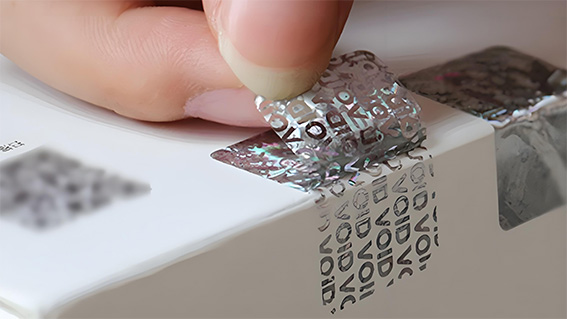
VOID anti-counterfeiting label rely on a physically destructive structure that leaves marks upon peeling, delivering tamper-proof protection at low cost.
Analysis of the VOID anti-counterfeiting label