
Transparent sticky paper: Application scenarios、environmental friendliness and green production paths
author: Eva
2026-03-17
In various fields such as packaging, office, home furnishing, and industry, transparent sticky paper has become an indispensable auxiliary material due to its advantages of being transparent and aesthetically pleasing, easy to stick, and highly adaptable. It can achieve a visual effect of invisible sticking and meet the identification needs in different scenarios. Its environmental attributes and the green production process have also become the core issues that Instiker is currently focusing on.
I. What are the applications of transparent sticky paper?
(1) Daily household and living scenarios
In daily life, transparent sticky paper is a practical helper that combines convenience and safety. Parents often use it to reinforce the edges of children's textbooks, replacing the traditional plastic covers, avoiding harmful chemicals in inferior plastics, reducing the risk of children's exposure, and minimizing plastic waste.
In addition, it can also be used for cleaning and storage, such as cleaning hair and dust from clothes and brooms, storing small parts like screws and pins; it can also be used for DIY creativity, making three-dimensional sticker labels and simple bookmarks, and even by simply folding it, making double-sided adhesive tape to meet temporary sticking needs. For families with infants, the transparent non-toxic sticky paper meets food-grade standards and is odorless and non-toxic, which can be safely used for marking and sticking on children's items without worrying about accidental contact risks.
(2) Office and Learning Scenarios
In the office scenario, the practicality of the transparent non-toxic sticky paper is prominent, and it is a good tool for improving efficiency. It can be used to reinforce the corners of documents to prevent paper damage, and can also cover the words or stickers on notebooks and files to provide protection; when a double-sided adhesive is urgently needed, fold the adhesive side outwards and cross-fold it to make a simple double-sided adhesive tape, which can be used to stick notes and photos without leaving any marks.
Meanwhile, it can also serve as a simple label. After writing the name on a piece of paper and covering it with transparent sticky paper, it can be made into a waterproof and wear-resistant storage box label or a file classification label, meeting the refined requirements of office storage. In the learning environment, in addition to protecting textbooks, it can also be used for marking mistakes and classifying notes. The transparent material does not cover the original content, making it flexible and convenient to use.
(3) Commercial and Packaging Scenarios
The commercial field is the core application scenario of transparent sticky paper, especially suitable for product packaging and labeling needs. On the packaging of food, cosmetics, electronic products, etc., transparent sticky paper can be used as a label carrier, clearly presenting product information, while not covering the appearance of the product itself, balancing the functionality and aesthetics, and meeting the safety standards for food contact materials. In the logistics industry, it can be used as the base material for logistics labels, adapting to the requirements for the attachment of logistics labels and electronic payment labels. Some types of transparent self-adhesive without a backing paper can also reduce the generation of packaging waste.
In addition, it can also be used for promotional signs of goods, price tags, and temporary fixation of display items, suitable for various commercial scenarios such as supermarkets, convenience stores, and e-commerce platforms.
(4) Industrial and Special Scenarios
In industrial production, transparent sticky paper plays an important role due to its properties of heat resistance, water resistance, and resistance to acids and alkalis. It can be used for marking industrial parts, temporary protection of equipment surfaces, temporary bandaging and fixation during processing, and some products can also be used for ink testing, acid and alkali protection, and other special requirements.
In the medical field, environmentally friendly transparent sticky paper that meets standards can be used for attaching medical receipts, ensuring compatibility with the medical environment. In the electronic field, it can serve as the base material for electronic labels, meeting the identification requirements of smart devices, and must comply with environmental standards such as the RoHS directive to avoid harmful substances affecting the performance of the devices and the environment.
II. The Current Environmental Status and Misconceptions of transparent sticky paper
(1) Environmentally Friendly Products Have Become the Market Dominance
With the enhancement of consumers' health awareness and environmental consciousness, as well as the improvement of industry standards, the mainstream transparent sticky paper currently available on the market have generally adopted environmentally friendly materials. Most products are non-toxic and odorless, and have passed international and domestic authoritative certifications such as ISO 9000 quality system, FSC certification, and SGS certification. Some products can remain stable at 100°C high temperature and do not release harmful substances. For example, the paper-based transparent sticky paper uses wood pulp fibers as raw materials, sourced from sustainable forest resources, and can be 100% biodegradable. It also has strong tensile strength and moisture-proof ability. Degradable transparent sticky paper products use special glass paper as the base material and are combined with water-based pressure-sensitive glue. They are easy to degrade, pollution-free, and have been widely used in lightweight packaging and other scenarios in Europe, Japan, and South Korea.
(2) Core Pollution Hazards of Non-Environmentally Friendly Products
There are still some low-cost transparent sticky paper with environmental hazards, mainly concentrated in two aspects: First, the base material uses non-environmentally friendly plastics. These materials are difficult to degrade, and after disposal, they will cause long-term pollution to the soil and water bodies, and the production process may also produce harmful gases; Second, the adhesive uses solvent-based glue, containing volatile organic compounds (VOCs). Not only will it emit a pungent smell, affecting human health, but it will also pollute the air, not meeting the requirements of atmospheric pollutant emissions. In addition, traditional transparent sticky paper with a base paper need to use high-quality wood pulp for the Graffin release base paper and are coated with silicone oil. They cannot be recycled and reused but can only be incinerated, causing resource waste and environmental pollution.
(3) Core Judgments for Environmental Friendliness
To determine whether a transparent sticky paper is environmentally friendly, the key lies in three core indicators: First, whether the base material is recyclable and degradable, and preferentially choose paper-based, degradable plastic, etc., avoiding the use of non-degradable inferior plastics; Second, whether the adhesive is environmentally friendly, preferentially choose water-based glue, hot melt glue, etc., without solvents and low VOCs, replacing solvent-based glue; Third, whether the production and waste disposal are environmentally friendly, that is, the production process has low energy consumption and less emissions, and after disposal, it can be recycled or naturally degraded, meeting the requirements of ISO 14001 environmental management system and domestic environmental standards such as GB 18580 and GB 18585.

III. What are the key measures taken by the self-adhesive label manufacturers to reduce environmental impact?
(1) Select environmentally friendly raw materials to control pollution at the source
Raw materials are the foundation of green production. Instiker has abandoned non-environmentally friendly materials and prioritized the selection of recyclable, degradable, non-toxic and harmless raw materials. In terms of base materials, it promotes the use of paper-based, degradable PLA films, PET films, etc., as environmentally friendly materials. Among them, the paper-based materials can prioritize the selection of sustainable forest wood pulp that has passed FSC certification to reduce excessive consumption of natural resources.
In terms of adhesives, it completely replaces solvent-based adhesives with water-based pressure-sensitive adhesives, hot melt adhesives, etc., to reduce VOC emissions and ensure that the adhesives comply with food safety standards such as GB 4806.7 and GB 4806.8, meeting the production needs of food-contact transparent self-adhesive paper.
At the same time, it reduces the use of additives and avoids adding harmful substances such as lead, mercury, and cadmium, ensuring that the products comply with international standards such as RoHS Directive and REACH Regulations, eliminating pollution risks at the source.
(2) Optimize production processes to achieve energy conservation and reduction
The optimization of production processes is the core to reduce environmental impact. Instiker has abandoned traditional high-energy consumption and high-emission processes and adopted advanced green production technologies. On one hand, it promotes the adoption of online production processes, completing printing, hot stamping, die-cutting, and cutting on one machine, reducing material loss and equipment energy consumption, and improving production efficiency while reducing waste.
On the other hand, it innovates the release layer production process, drawing on the innovative experience of Jiancaipaper Industry, and develops low-temperature heat-curing silicone oil technology, reducing the curing temperature of silicone oil from 130°C to 105°C, while adjusting the base material's temperature resistance formula to avoid color change of the base material during the production process. This not only reduces energy consumption but also improves product quality and reduces carbon emissions.
Additionally, it adopts solvent-free composite processing technology, using solvent-free polyurethane adhesives, and achieving high-precision coating through a precise mixing device, reducing solvent usage and emissions, in line with the concept of low-carbon production.
(3) Upgrade production equipment to enhance environmental efficiency
Old equipment is the main source of high energy consumption and high emissions. Instiker has increased investment in equipment and updated and upgraded efficient and energy-saving equipment.
On one hand, it introduces energy-saving printing, die-cutting, and coating equipment, which have lower energy consumption, higher production efficiency, and can reduce material waste and pollutant emissions.
On the other hand, it renovates existing equipment for environmental protection, such as installing waste gas recovery devices in the coating process to recover harmful gases like VOCs, which are treated and then discharged to ensure that the exhaust emissions comply with GB 16297 "Integrated Emission Standards for Air Pollutants"; in the heating process, it uses industrial steam as the heating source for the oven instead of traditional electric heating, which is both economical and efficient and reduces carbon emissions, such as Jiancaipaper Industry relying on the geographical advantages of the paper industry base and using steam from the dual-water power plant to achieve energy conservation and efficiency improvement.
At the same time, it regularly maintains and inspects equipment to ensure it is in optimal working condition, reducing energy waste and pollutant leakage caused by equipment failures.
(4) Strengthen waste disposal and promote resource recycling
The waste generated during production is one of the main pollutants. Instiker has established a complete waste recycling and treatment system to achieve resource recycling.
First, it classifies and recycles waste materials, collecting waste paper and plastic-based substrates separately, processing them, and reusing them in production, increasing the waste recovery rate, striving to reach over 90%, and reducing landfill and incineration pollution;
second, it optimizes packaging design, reduces the use of packaging materials, adopts degradable and recyclable packaging materials, replacing traditional plastic packaging, and marks recycling symbols on product packaging to guide consumers to properly handle discarded products;
Thirdly, handle production wastewater and establish a wastewater treatment system. Filter and purify the wastewater generated during the production process to ensure it meets discharge standards. At the same time, increase the utilization rate of water resources and strive to reach over 70% to achieve efficient water resource utilization.
Additionally, promote the production of transparent sticky paper without a base paper, completely eliminating Graffin release base paper, fundamentally reducing base paper waste and pollution. These products can also reduce material costs by 25% and achieve a win-win situation of environmental protection and economic benefits.
(5) Establish an environmental management system and strengthen full-process control
Instiker has established a complete environmental management system, integrating environmental protection concepts throughout the production, research and development, and sales processes.
Firstly, formulate strict environmental production standards, in line with ISO 14001 environmental management system and ISO 14040/14044 life cycle assessment standards, and conduct full-process monitoring of energy consumption, emissions, and waste treatment during the production process, promptly identifying and rectifying environmental hazards;
Secondly, increase environmental research and development investment, collaborate with research institutions, and jointly develop more environmentally friendly raw materials and production processes, such as Jiancaipaper Industry collaborating with the Guangzhou Institute of Chemistry of the Chinese Academy of Sciences to establish a provincial key laboratory, developing the world's first thermally cured base-free thermal sensitive self-adhesive label, promoting the environmental upgrade of the industry;
Thirdly, strengthen employee environmental training to enhance their environmental awareness and operational skills, establish an energy conservation and emission reduction incentive mechanism, and encourage employees to actively participate in environmental innovation, creating a "everyone cares about the environment, everyone does environmental protection" production atmosphere;
Fourthly, disclose environmental information, accept social supervision, promote the industry to form a green production consensus, guide consumers to choose environmentally friendly transparent sticky paper, forming a "production-consumption-recycling" green closed loop.
IV. Conclusion
The wide application of transparent sticky paper has greatly facilitated people's production and life. Moreover, its environmental friendliness and green production methods fully meet the inevitable requirements of the current "dual carbon" goals and sustainable development concepts. From protecting textbooks in households, organizing documents in offices, to packaging goods in businesses and marking parts in industries, the adaptability of transparent sticky paper in various scenarios has been continuously improving. And the popularization of environmentally friendly products has also enabled it to shake off the label of "pollution". For self-adhesive manufacturers, only by adhering to the green production concept and exerting efforts throughout the entire process, from raw materials, processes, equipment, to waste disposal, can they meet market demands while reducing environmental impact and achieving a win-win situation of economic and environmental benefits.
In the future, with the continuous innovation of environmental protection technologies, transparent sticky paper will develop in a more environmentally friendly, more efficient, and more adaptable direction, providing greener and more convenient sticking solutions for all industries.
Analysis of Kraft Paper Label: Food Applicability、Environmental Friendliness and High-Quality Production Pathway
The environmental impact of PET sticker、applicability for food packaging and the improvement paths for manufacturers
Related Article

Las etiquetas PET resisten el arrugamiento, la deformación, la pérdida de tinta, el cambio de tamaño y el manchado por tinta durante la producción a alta temperatura y la impresión digital con láser.
Comprehensive Analysis of PET Self-adhesive Labels
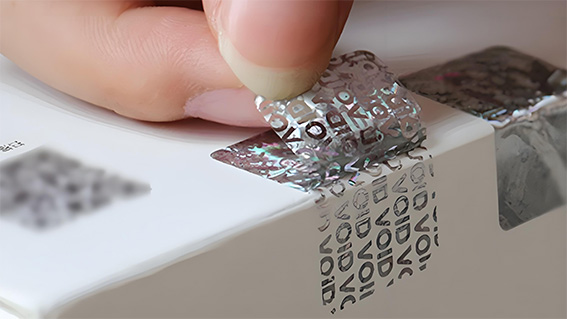
VOID anti-counterfeiting label rely on a physically destructive structure that leaves marks upon peeling, delivering tamper-proof protection at low cost.
Analysis of the VOID anti-counterfeiting label